

Buying a Folded Wheelchair
A folding wheelchair is ideal for people who travel frequently on a basis or have limited living space. This lets them carry their wheelchair on holiday or into public transport.
Start by shutting off the power and then disconnecting it (if necessary). To open the chair, find the safest place to put it in and then remove any obstructions.
Seat and Handlebar
The handlebar of a wheelchair can be folded down by releasing a lever on the side of the chair. This lets the user lower the footplates down and then swing them away, leaving space for standing transfers. This can also be useful to place the chair under a desk or table. Some chairs feature removable armrests to make them more attractive and to transport the chair in smaller vehicles.
The first thing consumers should do when folding a wheelchair is to make sure that all pins and locks are secured. This will stop the chair from being disengaged during transport or causing damage other things in the vehicle.
Most folding wheelchairs feature the cross-brace design that collapses the frame by pushing the sides together. There are other options available for collapsing a wheelchair including scissor braces which fold the seat in half and "quick release axles" which make the chair easier to maneuver into smaller space.
Before folding the wheelchair, it's important to check the chair for signs of wear. Also, be sure to adjust the chair as needed. This will not only improve the longevity of the chair, but also prevent any unexpected issues during transport or storage.
Rigid Wheelchairs are constructed with solid frames that can be folded into a box-like shape to be transported and stored. They are made from aluminum or titanium and offer more responsiveness since they don't flex when the wheelchair is propelled. This can decrease the amount of energy is required, and some users believe it gives them a better feeling of control.
Before folding a rigid wheelchair up the user should inspect the chair for any indications of wear or wear. They should also determine if any adjustments are needed. This will allow the user to determine if they need to raise or lower the footplates. They can then adjust the legrests. It is crucial that the user consult their physical therapist before making any modifications to their wheelchair as it could impact their transfer and standing capabilities.
Uprights
The uprights are the shorter arms near the middle of the wheelchair frame, just below the point at which the seat connects with the backrest. The uprights or hinges should be clearly labeled and generally a little higher than the armrests. It is vital to identify and align the parts of the chair so that they stay in the desired folded position.
Wheelchairs that are able to be reduced in size for storage and transport are referred to as collapsible, or folding, wheelchairs. They are usually self-propelled, and come with a foldable frame and backrests that can be folded to reduce the size and width. The steerable wheels at the front and rear load wheels are attached to brackets that pivot on the upper and lower bars on the sides of the walls. They also help support the uprights.
The links 61 and62 are strained when the chair is fully opened (see Figs. The links 61, 62 (see Figures. 2) of each slide are tensed, and the uprights 9 aren't able to be moved in relation to one another, even when the handles are raised. When the wheelchair is semi-folded, the uprights are moved forward by moving the slides on the front and back axles, respectively.
If the seat depth is too narrow it can cause the wheelchair user to sit incorrectly and not be able to alleviate the pressure on their thighs. This could result in pressure sores. To determine whether the seat is deep enough, measure the distance between the pelvis's back to the point where the pre-seat begins. bone shelf.
After the wheelchair has been positioned correctly, it must be secured and locked. This will help prevent any accidental injury or damage during storage and transport. The wheelchair must be tested several times to ensure that the locking mechanisms work as they ought to. This step is especially crucial for those who have poor sensation in their thighs and feet, since unintentional movement of the chair during storage or transportation could cause serious injuries. After the wheelchair is secured and locked, it can be safely stored in its travel bag.
Seat and Backrest
The backrest and seat of a wheelchair are designed to offer stability, support, comfort and pressure relief. They also aid in preventing pressure sores, ulcers and reduce discomfort for individuals that spend prolonged periods of time sitting. Seat cushions and backrests for wheelchairs are available in various dimensions, shapes and materials. Foam or air options are available for comfort, whilst foam/air and foam/gel cushions are a more personalised solution that provides a balance between stability and pressure redistribution.
The most suitable wheelchair for you depends on the setting you will be using it in, as well as the specific requirements you have. Your doctor will be able to guide you in this decision making process and suggest the most appropriate type of wheelchair.
Wheelchairs that fold can be collapsed and can be reduced in size for storage, transport and travel. The wheelchairs are usually designed with a "cross-brace", or an 'X" frame which allows them to fold in half when the sides are pulled together. Recently, a scissor brace has been developed that allows chairs to be folded from the front and back rather than from the side, which can save space.
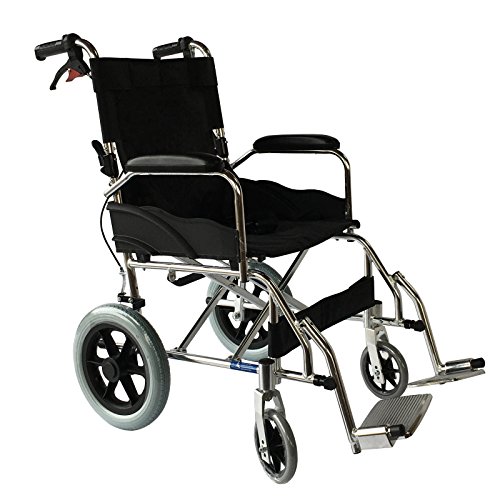
The rigid frame wheelchairs are not foldable and require a larger vehicle to move them from one place to another. They are usually considered wheelchairs for young athletes and minded individuals but can be used by anyone who requires more stability than a folding chair offer.
Many wheelchairs are made from carbon fibre which is extremely light and durable. The use of this material may however increase costs. Some manufacturers have found that combining carbon fibre with titanium can reduce costs.
Wheelchairs that fold up can be stored in a closet, a store room or in the car's boot for transportation to appointments with a doctor, social events and family gatherings. Even on vacation! In addition, our engineers have developed a special solution with the "fold-forward backrest" which can reduce the height of your wheelchair to make it smaller and easier to take in smaller vehicles and cargo hold on planes.
Wheels
Wheels are the most important part of a wheelchair. best lightweight folding wheelchair uk is particularly true for those who need mobility because of an illness that restricts their ability to walk or move around independently. For those with disabilities the quality of wheels, tyres and casters can make a huge difference in their daily lives. A good set wheels can help them to get where they want to go without feeling rough edges or bumps on the road.
Wheels on a wheelchair consist of a tyre (and rim or hand rim for manual chairs) spokes, mags, spokes and hubs. They are made of either metal or plastic, depending on the type of wheel. A typical wheel weighs about 7.5 pounds and can support up to 300 pounds.
Some wheelchair users find it difficult to store and transport their chair, especially when the wheels aren't foldable. Wheels that fold, such as the Morph Wheel by Vitamins Design, London, aim to change this. The wheel can be folded into itself, occupying only 12 liters, less than the 22 liters it takes up in its open position.
This new model was invented by the same person who created bicycle wheels that fold. It uses a central hub that is comprised of six aluminum structures that fold up instead of the traditional spokes. It also has a rim made of aluminum divided into six interlocking segments, and covered with a tire that is filled with foam. The result is a wheel roughly half the size of a standard 24 inches wheelchair one.
The wheel is still a prototype, but it has already attracted interest from the disability community. It was a finalist alongside a library located in South London, and a stool made of magnets for the Design Museum's Designs of the Year 2013.
The designers are working hard to bring these wheels to the market as soon as they can although they're not yet accessible to all wheelchairs. The company relied on a specific group of wheelchair users to keep the design perfect. A pair of Morph Wheels will cost around $950 and be heavier than other wheelchair wheels. They can be tucked away in overhead bins for airlines, or in tight rental car spaces. This makes travel easier for wheelchair users.